Skip to content

Let’s talk about something critical in our line of work: keeping those Electric Submersible Pump (ESP) systems running smoothly downhole. We all know the drill – the oilfield is tough, and protecting our ESP cables is non-negotiable. Picking the right downhole ESP cable protector isn’t just another item on a purchase order; it’s a strategic move that directly impacts how long our equipment lasts, how efficiently we produce, and ultimately, our bottom line. This guide is all about giving you the practical insights you need to customize those ESP cable clamps effectively, ensuring your valuable assets are protected.

Why Getting Your Cable Protector Specs Right is a Big Deal
Downhole environments are brutal – high temps, crazy pressures, and corrosive fluids are the norm. Your ESP cables and control lines are constantly at risk, especially around those tubing connections. A solid, custom-fit downhole ESP cable protector is your best defense. It prevents crushing, chafing, and fatigue, which can lead to expensive failures. By getting this right, you’re not just buying a part; you’re investing in uptime and avoiding costly workovers.
The Key Measurements You Need for a Perfect Fit
To get a protector that truly fits like a glove and does its job, you’ve got to nail down some core dimensions. These aren’t just suggestions; they’re the foundation for designing and manufacturing top-notch cast cable protectors.
1. Tubing Size
First up, your production tubing’s outer diameter (OD). This is the starting point for your protector’s size. We’re talking common sizes like 2-3/8″, 2-7/8″, 3-1/2″, or 4-1/2″ up to 7 inches. Get this measurement spot-on. If it’s off, the protector won’t seat correctly, and your cables won’t get the protection they need.
2. ESP Cable Size and How It’s Laid Out
ESP cables come in different shapes and sizes – flat or round. You need to know the exact dimensions of your ESP cable, often given in AWG (American Wire Gauge) like #4, #2, or #1. The protector has to hug that cable just right, without squeezing it too tight or letting it flop around.
3. Control Line Count and Dimensions
These days, most wells have extra control lines for things like chemical injection, fiber optics, or permanent gauges. You’ll need to provide the exact number and OD of each of these lines. Your cable protector will have specific channels or slots built in to keep these lines safe and prevent them from getting pinched or damaged alongside the main ESP cable.
4. Casing Outer Diameter (OD)
This one’s huge for figuring out your annular clearance. The casing OD directly tells us how much room we have for the entire tubing string assembly, including the protectors. If you don’t have enough clearance, you’re asking for trouble during deployment – hang-ups, damage to the protector or casing, or even getting stuck in the well.
5. Coupling Type and Connection Style
The type of tubing coupling you’re using is super important because it dictates how the cable protector will attach to your tubing string. Here are the common ones we see:
- External Upset End (EUE): This is probably the most common. It’s got a thicker end for threading. Most standard cross coupling cable protectors are designed to work perfectly with EUE connections.
- Non-Upset End (NUE): You don’t see this as much with ESPs. It’s got a consistent wall thickness all the way through.
- Premium Connections: These are specialized connections (think Tenaris, JFE, VAM) built for extra sealing and strength in tough spots. They often have unique shapes that might require a specialized or slim design cable protector to keep that crucial running clearance.
Knowing your coupling type is key to picking a protector that clamps on securely without messing with the connection or creating too big of a profile.

Crunching the Numbers: Calculating Your Running OD for Downhole Success
As a procurement engineer, one of your most vital tasks is figuring out the running OD of your ESP assembly. This is the biggest outside dimension of your tubing string, including the ESP cable, control lines, and the cable protector itself. You’ve got to compare this number carefully against your casing’s internal diameter (ID) to make sure everything goes downhole safely and smoothly.
Here’s the basic formula:
Running OD = Tubing Coupling OD + (2 x Protector Wall Thickness) + ESP Cable Thickness + Control Line Thickness (if you have them)
It’s absolutely critical that your calculated running OD is noticeably smaller than the casing ID. This gives you enough drift clearance to handle any wellbore deviations, minor bumps in the casing, or even a bit of debris. This margin is what prevents those frustrating hang-ups and ensures your running operations are as smooth as possible.
Koala Cable Protector: Tough Quality and Smart Design for Our Wells
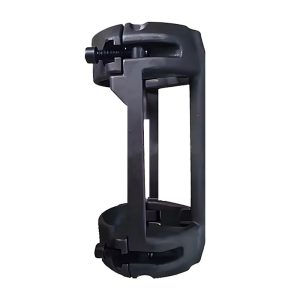
When we’re talking about cast cable protectors, quality and smart design aren’t just buzzwords – they’re necessities. The Koala Cable Protector really stands out. We’ve seen their quality go head-to-head with top brands like Hulk USA protectors, and Koala consistently delivers. Their commitment to precise engineering means their protectors can take a beating in the harshest downhole conditions.
One of the big wins for Koala Cable Protectors is their slim design. This is a game-changer, especially in wells with tight annular spaces, like those slim-hole completions or highly deviated wells. That slim profile keeps the overall running OD down, making deployment easier and cutting down on hang-up risks, all while giving your ESP cables and control lines top-notch protection. Made from premium materials, Koala protectors are built tough, offering excellent impact resistance and durability. That translates directly to longer ESP run times and fewer costly interventions.
Wrapping It Up
Specifying the right downhole ESP cable protector is a detailed job, and it really hinges on knowing your wellbore specs and equipment inside and out. By focusing on those critical dimensions – tubing size, ESP cable size, control line setups, casing OD, and coupling types – you can confidently pick a protector that offers superior protection. Companies like Koala Cable Protector, with their high-quality cast cable protectors and innovative slim design options, are providing reliable solutions that meet the tough demands of today’s oil and gas operations. Your careful selection here directly contributes to a more efficient and profitable production, plain and simple.