Skip to content

In an ESP well, a cable protector looks like a small part. But once it goes downhole, it becomes a quiet safety barrier between production continuity and an expensive workover. If the ESP cable is scratched, squeezed, cut, or repeatedly rubbed against the casing, the failure may not appear immediately. It may come weeks or months later, when the well is already producing, the intervention cost is high, and the operator starts asking the painful question: could this have been prevented?
For many wells, the answer is yes.
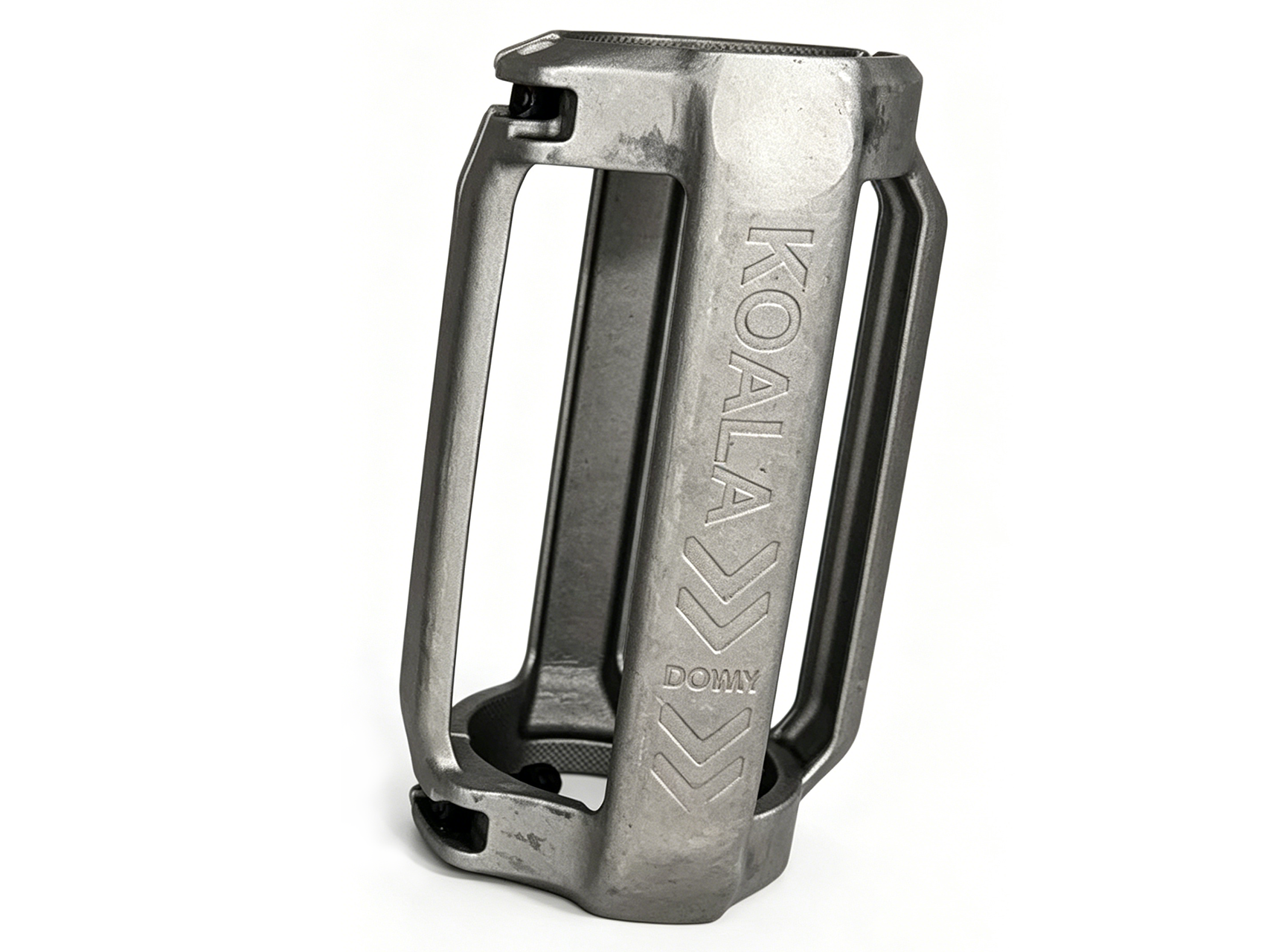
That is exactly why Koala develops cast iron cable protectors with centralizing function for demanding downhole applications. For 6-inch tubing or large production string configurations, the protector must do more than simply hold the cable. It must secure the ESP cable, protect control lines, reduce side contact, improve running stability, and support safer operation through deviated and horizontal sections.
This article explains how a cast iron cable protector with centralizing function helps solve real downhole problems, especially in ESP wells where cable protection, tubing stand-off, and mechanical reliability cannot be treated as separate issues.
Why Downhole Cable Protection Still Fails in Real Wells
Cable failure is not always caused by one obvious accident. In most cases, it is a chain reaction.
The tubing string enters the well. The cable is clamped to the outside of the tubing. The string passes through doglegs, restrictions, collars, casing connections, and deviated sections. The cable experiences drag, compression, vibration, and side loading. If the protector design is weak, oversized, poorly matched, or unable to maintain cable position, the cable becomes the first victim.
In ESP wells, the motor lead extension, power cable, sensor cable, capillary line, and control line are all exposed to this risk. Once insulation is damaged, electrical integrity may decline. Once the cable is pinched, internal conductor damage may occur. Once a control line is flattened, the whole completion system may lose reliability.
A protector is supposed to prevent these problems. But if the protector only works like a simple clamp, it may not be enough for high-deviation wells.
That is why a protector with centralizing function is so important.
The Real Challenge in 6-Inch Tubing Applications
A 6-inch tubing application gives the operator a larger production path, but it also increases the mechanical challenge around the tubing body. Larger tubing means heavier equipment, larger contact area, and higher running load. In deviated wells, the tubing does not always stay centered. Gravity pushes the string toward the low side of the casing. When that happens, cable protectors may become the main contact point between the tubing string and casing wall.
If the protector is not designed correctly, three things can happen.
First, the ESP cable may be pressed against the casing wall. Second, the protector may rotate or move under repeated drag. Third, the tubing string may run with unstable contact, increasing friction and installation risk.
For 6-inch tubing, the protector design must balance several factors at the same time: cable groove depth, running OD, body thickness, contact surface, bolt strength, installation speed, and casing drift clearance. One mistake in any of these details can create downhole risk.
This is where Koala’s structural design approach becomes valuable.
Application Example: Permian Basin Horizontal ESP Wells
The Permian Basin is one of the most active oil-producing regions in North America. In areas such as the Midland Basin and Delaware Basin, operators commonly deal with long lateral sections, high production targets, artificial lift optimization, and frequent ESP applications.
In a horizontal or highly deviated ESP well, the cable protector does not live an easy life. During running, the tubing string may slide along the casing. The ESP cable may face repeated contact points. The protector must guide, hold, and shield the cable while allowing the string to pass through the wellbore as smoothly as possible.
For a 6-inch tubing application in this type of field environment, a cast iron cable protector with centralizing function can help the operator solve several real problems:
It reduces direct cable-to-casing contact.
It helps maintain better stand-off between tubing and casing.
It provides a stronger mechanical barrier around vulnerable cable sections.
It lowers the chance of cable extrusion or pinching.
It improves running stability in high-angle sections.
It gives the operator more confidence before the string goes downhole.
In other words, the product is not only about protecting a cable. It is about protecting the whole production plan.
What Is a Cast Iron Cable Protector With Centralizing Function?
A cast iron cable protector with centralizing function is a downhole tool installed on the tubing string to secure and protect external lines. These lines may include ESP power cable, motor lead extension cable, control line, chemical injection line, capillary line, or sensor cable.
The centralizing function means the protector body is designed not only to clamp the cable but also to help create controlled stand-off between the tubing and casing. The outer profile acts like a guided contact structure. Instead of allowing the cable to become the lowest contact point, the protector body takes the mechanical contact.
Think of it like a guardrail on a mountain road. The guardrail does not drive the car, but when the road becomes dangerous, it prevents the car from falling off the edge. A good downhole protector works the same way. It does not produce oil, but it protects the system that keeps the well alive.
Why Cast Iron Is a Practical Material Choice
In oilfield equipment, material selection should not be driven by fashion. It should be driven by application.
Cast iron remains a practical choice for many cable protector applications because it provides strong compressive support, stable geometry, and cost-effective manufacturability. For protector bodies with complex grooves, rounded contours, and reinforced contact areas, casting allows the manufacturer to create shapes that are difficult or expensive to machine from solid bar.
For 6-inch tubing applications, the protector body needs enough mass and rigidity to resist impact and side loading. Cast iron can provide a strong structural base when the design is properly engineered and the casting quality is controlled.
The key is not simply “cast iron.” The key is controlled casting, proper dimensional inspection, suitable surface treatment, and a structure designed around real wellbore conditions.
Koala’s Structural Design Philosophy
Koala’s product logic is simple: downhole safety must start from structure.
A cable protector must fit the tubing. It must match the cable. It must control the running OD. It must lock securely. It must avoid sharp edges. It must protect the cable under drag, impact, and vibration. It must be easy enough for the field crew to install correctly.
For a cast iron protector with centralizing function, Koala focuses on several structural points.
- Streamlined Outer Profile
A protector used in deviated wells should not have aggressive corners or unnecessary protrusions. A streamlined outer profile helps the protector pass through casing restrictions more smoothly. It also reduces the chance of hanging up during running or pulling.
For 6-inch tubing, the outer profile becomes even more important because the base diameter is already large. Every extra millimeter of running OD must be justified.
- Accurate Cable Groove Design
The cable groove is where many failures begin. If the groove is too shallow, the cable may protrude. If it is too tight, the cable may be squeezed. If it is too loose, the cable may move during installation. If the groove angle is wrong, the cable may experience
stress concentration.
Koala designs cable grooves according to actual cable size and line configuration. This can include flat ESP cable, round cable, control line, capillary line, encapsulated line, or multi-line bundles.
- Centralizing Contact Geometry
The centralizing function is created through the protector’s outer contact design. The body helps keep the tubing string from allowing the cable to become the main contact point. In high-angle wells, this is especially important because gravity naturally pushes the
string toward the low side.
A good centralizing protector does not need to overcomplicate the completion. It gives the tubing string a more controlled contact profile while protecting the cable inside the groove.
- Secure Locking Structure
Downhole loosening is unacceptable. If a protector moves, rotates, opens, or falls off, the result can be serious. Koala’s protector structure can be designed with secure bolting, hinge-type assembly, or customized locking features depending on tubing size, coupling
type, and operating conditions.
The goal is clear: once installed, the protector should stay where it belongs.
- Controlled Running OD
For any downhole protector, running OD is a critical parameter. A protector can be strong, but if it is too large, it creates another problem. It may not pass the casing drift. It may increase running friction. It may create installation risk.
For 6-inch tubing, Koala can evaluate tubing OD, coupling OD, casing ID, drift diameter, cable size, and well deviation before finalizing the protector design. This engineering review helps ensure that the protector is not only strong on paper but practical in the well.
Full Testing Reports: Not Optional, But Necessary
In serious oilfield applications, a product without testing documents is not a product. It is only a promise.
Koala supports its cable protector supply with a complete inspection and testing mindset. For downhole applications, especially ESP wells, customers need evidence before they trust a component that will disappear thousands of feet below the surface.
A full testing package may include dimensional inspection, material verification, visual inspection, coating inspection, pull test, impact test, fit-up test, bolt torque check, and packaging inspection.
Dimensional Inspection
Dimensional inspection confirms that the product matches the approved drawing. For 6-inch tubing protectors, important dimensions include tubing fit, protector length, running OD, cable groove size, bolt location, body thickness, and coupling clearance.
This is the first gate. If the dimensions are wrong, everything else becomes meaningless.
Material Verification
Material verification confirms whether the casting material meets the required grade. For cast iron products, this may include chemical composition, mechanical properties, hardness, or supplier material certification.
Material control is especially important because cast products must be consistent from batch to batch.
Mechanical Performance Test
Mechanical testing helps prove that the protector can handle real operating loads. Depending on customer requirements, tests may include clamping force evaluation, pull test, impact resistance, side load test, or simulated installation test.
The purpose is not to make the report look impressive. The purpose is to find weakness before the product goes into the well.
Fit-Up Test
A fit-up test checks how the protector installs on the actual tubing or a qualified test fixture. This is where engineering meets field reality. The protector must close properly, grip properly, protect the cable properly, and remain practical for installation crews.
Surface and Coating Inspection
Downhole parts face corrosion, handling damage, and rough field conditions. Surface finish and coating quality matter. Sharp edges should be removed. Cable contact areas should be smooth. Coating should be uniform where required.
Small surface details can become big downhole problems.